


Bordeaux is intimidating by design. A tangle of châteaux, classifications, communes, and centuries-old prestige, wrapped in a language most wine drinkers don’t speak. For many, it feels like a region reserved for collectors and sommeliers—buttoned-up, backward-looking, and completely out of reach.
But Bordeaux isn’t just one thing. It’s not just First Growths and futures, or a monolith of expensive red blends. It’s a vast and wildly complex region—over 110,000 hectares, 60+ appellations, and more than 6,000 producers. It’s also one of the most influential wine regions on Earth: the blueprint for Napa, Tuscany, Rioja, and beyond. Its fingerprints are on nearly every Cabernet and Merlot-based wine made today.
And yet, Bordeaux has an image problem. Among everyday wine drinkers, it’s often seen as elitist or irrelevant. Among insiders, it’s dismissed for flooding the market with soulless supermarket plonk. Both are true to a point—but neither tells the full story.
Because underneath the weight of tradition, Bordeaux is changing. There’s a new generation of winemakers abandoning chemicals, questioning classifications, and rejecting the idea that Bordeaux must always taste, cost, or behave a certain way. They're farming organically, experimenting with native yeasts, and fighting to keep the region’s soul alive—often in places you’ve never heard of.
So this isn’t a deep dive into Premier Cru pricing strategies. It’s a practical, plainspoken breakdown of what Bordeaux actually is—why it’s been so important, how it’s structured, and where the real energy is right now. Whether you’re trying to decode a wine list or find bottles that overdeliver for the price, this is your crash course in the world’s most defining region.
Let’s start at the top—and tear it down from there.
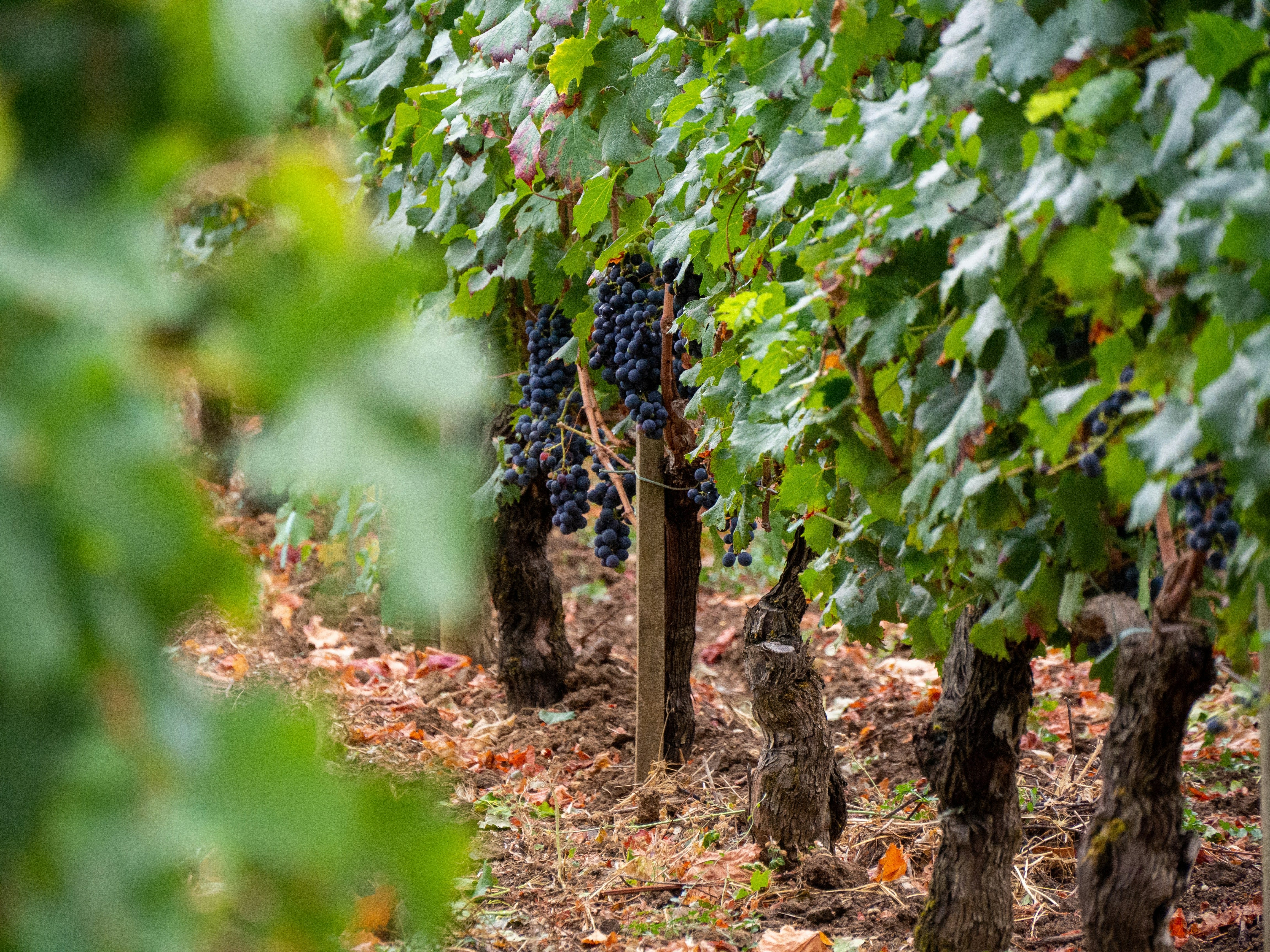
The Myth and Prestige
Bordeaux is synonymous with prestige. For centuries, it has defined what fine wine looks like—stately châteaux, long cellaring potential, and a price tag to match. Much of that reputation rests on the 1855 Classification, commissioned by Napoleon III to showcase the region’s best wines at the World’s Fair in Paris. The resulting hierarchy ranked producers from First to Fifth Growths, elevating names like Lafite, Latour, Margaux, and Haut-Brion to near-mythical status.
And it worked. The system gave Bordeaux a blueprint for luxury—a way to turn history into marketing. To this day, the classification still shapes global perception and pricing, with many top-tier bottles trading more like assets than drinks.
But the system has its flaws. It ranks châteaux, not vineyards. It’s barely changed in 170 years. And while some classified estates continue to make extraordinary wine, others coast on reputation. Prestige can be powerful—but it can also be stale.
Still, the spotlight stays fixed on Bordeaux. In top vintages, the region draws breathless headlines and soaring demand. But while the world obsesses over the same sixty-one estates, something more interesting is happening offstage.
A new generation is stepping out of the shadow of classification—rewriting what Bordeaux can be, one bottle at a time.
A Coin with Two Sides
Bordeaux is split by the Gironde estuary—and with it, the region’s soul. The Left Bank is built on gravel, Cabernet Sauvignon, and legacy. The Right Bank leans into clay, Merlot, and elegance. Understand that divide, and you’ll unlock the rhythm of Bordeaux.
Left Bank = Cabernet Sauvignon + Gravel + Structure
The Left Bank is where Bordeaux puts on its armor. These are wines built for the long haul—structured, tannic, age-worthy. Expect blackcurrant, graphite, cedar, and a touch of swagger.
Médoc & Haut-Médoc
Home to the largest concentration of classified estates. Wines are firm, classic, and often austere in youth. Great bottles unfurl over decades.
Margaux
The most elegant expression of the Left Bank. Silky texture, floral aromatics, and an almost Burgundian finesse wrapped in Bordeaux frame.
Pauillac
The heavyweight. Dense, powerful, and unmistakably Cabernet-driven. Flavors of cassis, tobacco, pencil shavings, and authority.
Graves / Pessac-Léognan
Where red meets white. Reds show spice and mineral lift, while dry whites—made from Sauvignon Blanc and Sémillon—offer freshness, texture, and ageability.
Right Bank = Merlot + Clay + Plushness
The Right Bank trades structure for seduction. These wines are softer, rounder, and often more approachable young. Red fruit, mocha, herbs, and a warm, generous core.
Saint-Émilion
Known for its limestone plateaus and dramatic slopes. Wines blend Merlot’s richness with Cabernet Franc’s lift. Structured, but layered with polish.
Pomerol
Small, unclassified, and legendary. Pure Merlot magic—dense yet velvety, with notes of plum, truffle, and cocoa. Less architecture, more emotion.
Fronsac, Castillon, Côtes de Bordeaux
The frontier zones. More freedom, more value, more surprises. These are the places to find energy, honesty, and experimentation—often at half the price.
Bordeaux isn’t just red blends and rigid rules. It’s a landscape of contrast—between banks, soils, and philosophies. Once you taste that tension, you start to see the whole picture.
Bordeaux at a Crossroads
Legacy can be a prison. And Bordeaux, for all its wealth and history, is starting to feel the squeeze.
The climate is moving faster than the old rules can adapt. Summers are hotter. Vintages are more extreme. Sugar levels skyrocket, acidity plummets, and alcohols creep past 15%. In some cases, Merlot—the Right Bank’s backbone—ripens too quickly. Estates once tied to Cabernet Sauvignon are rethinking their blends. Others are quietly planting once-obscure varieties like Touriga Nacional and Castets to future-proof their vineyards.
Consumer values are changing, too. People want transparency. Fewer chemicals. Less manipulation. More authenticity. The glossy, high-octane style Bordeaux leaned into in the 2000s doesn’t resonate the same way it used to. Younger drinkers are seeking freshness, sustainability, and soul.
And the market? The en primeur system feels increasingly antiquated. The classified growths keep getting more expensive, but outside that top tier, producers are struggling. Competition is global now—and Burgundy, the Jura, Tuscany, the Rhône are all gunning for the same attention, with far less baggage.
So Bordeaux has a choice: evolve or ossify.
The good news? Some producers already are. Quietly, radically, sometimes at great risk. They’re rewilding vineyards. Rejecting chemicals. Bottling wines with energy and nerve. Some come from classified estates; others work outside the system entirely.
They’re not here to burn Bordeaux down. They’re here to save it.
The New World of Bordeaux
There’s a quiet revolution happening in Bordeaux—but not where you’d expect.
It’s not in the limestone cellars of First Growth châteaux. It’s in Castillon, Francs, Sainte-Foy—places once dismissed as afterthoughts. It’s in the hands of young winemakers inheriting their family’s vines and refusing to make wine the way their parents did. It’s in the decisions to farm without chemicals, to harvest by hand, to ferment with native yeast and let the land speak.
This new generation isn’t trying to tear Bordeaux down—they’re trying to wake it up.
For decades, Bordeaux’s identity has been tethered to classification systems, luxury pricing, and stylistic conformity. Wines were engineered to please critics, aged in 100% new oak, made to taste the same year after year. And while that model still dominates, it’s starting to crack.
The new wave is different. These producers are seeking freshness over force, clarity over weight. They’re lowering extraction, scaling back oak, bottling wines that feel alive. They’re turning forgotten appellations into hotbeds of experimentation. And some of them are making the most soulful, compelling Bordeaux in a generation.
This isn’t a trend. It’s a shift in values.
They’re not chasing scores. They’re chasing balance, energy, and a kind of truth that Bordeaux hasn’t always allowed. And in doing so, they’re proving that Bordeaux’s future doesn’t have to be bound by its past.
What Defines the New Wave of Bordeaux
There’s no manifesto, no official alliance—but there is a shared ethos. Across the region, a growing number of producers—some small and scrappy, others iconic and historic—are reimagining what Bordeaux can be. Here’s what unites them:
Farming with Intention
This new generation isn’t just growing grapes—they’re rebuilding ecosystems. Whether certified organic or fully biodynamic, the focus is on soil health, biodiversity, and long-term sustainability.
→ Château Pontet-Canet (Pauillac) was the first classified growth to adopt biodynamics—and a blueprint for regenerative farming at scale. Horses in the vineyard, minimal intervention in the cellar, and wines that channel place over polish.
Working Outside the System
Many of the most exciting wines today don’t carry the most prestigious appellations—or any at all. Instead, they rely on transparency, not classification, to earn their place.
→ Château Le Puy (Francs-Côtes de Bordeaux) abandoned the AOC system entirely, refusing to compromise on its natural winemaking ethos. The result? Wines that feel singular, soulful, and defiantly Bordeaux.
Letting the Wine Speak First
Less extraction. Less oak. Less ego. These winemakers are scaling back in the cellar to let terroir lead. The goal isn’t to impress—it’s to express.
→ Domaine de Chevalier (Pessac-Léognan) crafts reds and whites with rare precision and restraint. Sustainably farmed and aged with nuance, their wines are among the few that rival Burgundy for elegance and longevity.
Embracing Forgotten Places
Not all great Bordeaux comes from Pauillac or Pomerol. Some of the most vital work is happening in the margins—Castillon, Sainte-Foy, Fronsac—where freedom still exists.
→ Château le Rey (Castillon) blends organic farming with modern precision, making Merlot-based wines that are vibrant, balanced, and wildly drinkable.
Reconnecting with the Human Side of Wine
Less château, more cellar. These producers are winemakers first—not brand managers. You’ll find them pruning vines, driving tractors, racking barrels.
→ Clos du Jaugueyron (Margaux / Haut-Médoc) is a tiny, biodynamic operation working grand terroir with a human hand. Honest, elegant, and quietly radical.
These aren’t just wines. They’re signals. A reminder that Bordeaux isn’t bound by its past—it’s being rebuilt, vine by vine.
Final Pour
Bordeaux doesn’t need defending—but it does need rediscovering.
For too long, the region has been boxed in by its own mythology: classified growths, Parker points, futures auctions, and a style that seemed carved in stone. But Bordeaux was never meant to be static. Its greatest strength has always been its capacity to adapt.
Today, that adaptation looks different. It’s not driven by merchants or marketers. It’s driven by growers walking their own vineyards, asking better questions. How can we work with nature, not against it? How do we make wine that reflects a place instead of polishing it into sameness? How do we honor tradition without being shackled by it?
The answers aren’t coming from the top down. They’re coming from the fringes, the margins, and yes—even a few classified châteaux who’ve dared to change course.
So if you’ve written Bordeaux off as too old, too corporate, too expensive, or too boring—good. That means you’re ready to meet it again, on different terms.
Bordeaux isn’t back. It never left.
But it is changing. And it’s never been more worth your time.
Looking forward to learning more about and tasting more Bordeauxs!