


I used to hate natural wine.
Not just dislike it—despise it. The kind of visceral reaction usually reserved for spoiled milk or for people who talk on speakerphone in public spaces. It wasn’t the idea that bothered me, but the execution: cloudy, fizzy, mousy, often unstable. I’d been handed too many glasses that smelled like cider and tasted like a dare.
And yet here I am, writing a defense of the very thing I once swore off.
What changed? A restaurant in Paris. A conversation with a server. And a bottle of Chénas that was floral, structured, and alive in the best possible way. It didn’t shout “natural wine.” It just whispered: this is what wine used to taste like, before we tried to make it perfect.
That bottle cracked something open.
Because here’s the truth: a lot of the wine you get your hands on today is anything but natural. And most “natural wine” is misunderstood—by its champions and its detractors alike.
What does “natural” wine even mean?
There’s no legal definition of natural wine. That’s either its greatest strength or its biggest liability, depending on who you ask.
At its core, natural wine is about minimal intervention: organically or biodynamically farmed grapes, native yeast fermentation, little to no sulfur, and no chemical additives. But that’s a philosophy, not a checklist. And when ideology trumps execution, things fall apart fast. Which is why for every brilliant, soulful bottle of natural wine, there’s another that tastes like sink water left in the sun.
But real natural wine isn’t a trend. It’s a return. A revival of an older logic of winemaking, rooted in observation, patience, and trust. Much of that thinking traces back to biodynamic agriculture, developed in the early 20th century by Austrian philosopher Rudolf Steiner.
Steiner—best known for founding the Waldorf school movement—proposed an agricultural model that treated farms as self-sustaining ecosystems. Biodynamics emphasized lunar cycles, composting, and a kind of energetic harmony between earth and cosmos. To the uninitiated, it sounds like mysticism with dirt under its nails. But for growers fed up with industrial farming, Steiner’s ideas offered something radical: a blueprint for farming with nature instead of against it.
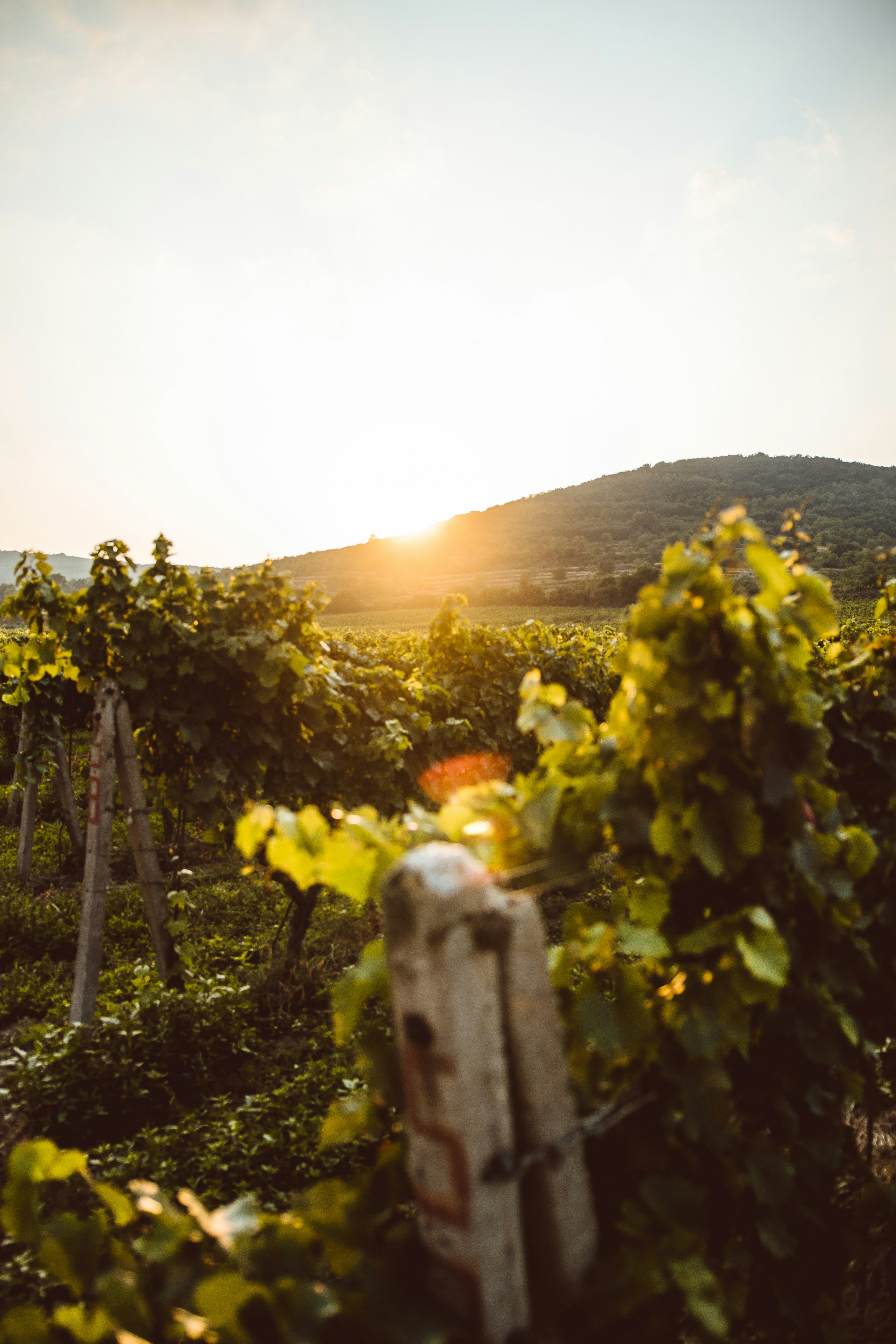
Many of today’s best natural winemakers—especially in Alsace, the Loire, Burgenland, and Sicily—follow biodynamic principles, whether certified or not. Not because it’s fashionable, but because it works. Their wines feel more alive, more expressive, and less sterile. Less corrected. Biodynamic farming predates the natural wine boom by nearly a century. So when you drink a great natural wine, you’re not sipping on a trend. You’re tasting a lineage. That said, lineage doesn’t guarantee quality. And that’s the tension we’re in now.
Natural wine is more visible than ever. In cities like Paris, London, LA, and Copenhagen, it’s practically the default in every wine bar worth its salt. And yet it still represents a tiny fraction of global wine production—less than 5%, depending on how you count. For something that dominates the moodboards and Instagram feeds of sommeliers and chefs, it remains a niche, misunderstood sliver of the wine world.
And maybe that’s why people still get it so wrong.
From obscurity to obsession
To understand how we got here, you have to look back at how the wine world lost its way.
Following World War II, winemaking—like agriculture at large—shifted toward industrialization. Chemical fertilizers, synthetic pesticides, and mechanized vineyard practices became the norm. Yields went up. Prices came down. But terroir? Expression? Individuality? Those got lost somewhere between the stainless steel tanks and the lab.
In that climate, a quiet resistance began to take root. A handful of winemakers started asking uncomfortable questions: What happens when you strip wine of its connection to the land? What if you let nature lead, instead of trying to control every variable?
These weren’t marketing experiments. They were acts of defiance. And in France’s Beaujolais region, they began to crystallize into a movement.
In the 1970s, a group of vignerons later dubbed the “Gang of Four”—Marcel Lapierre, Guy Breton, Jean-Paul Thévenet, and Jean Foillard—drew inspiration from Jules Chauvet, a local winemaker and chemist who preached the gospel of natural fermentation, organic farming, and zero additives.
The wines they made weren’t just different. They were alive. Vibrant. Uncorrected. They rejected the sterilized sameness of postwar winemaking in favor of something rawer, more expressive. And they laid the foundation for the modern natural wine movement.
In the decades that followed, the movement slowly expanded. First across France, then into Italy and Spain, and eventually to California, Australia, and beyond. Importers like Jenny & Francois and Louis/Dressner introduced these wines to American palates, starting in New York and radiating outward. The wines were weird. Honest. Sometimes flawed. But they carried a sense of place. A pulse. A kind of sensory magnetism that drew in chefs, sommeliers, and the kind of drinkers who cared more about story than score.
By the 2010s, natural wine wasn’t just a category—it was a vibe. It aligned with everything the cultural zeitgeist demanded: sustainability, authenticity, aesthetic maximalism, and a good story. It looked great on a shelf. It read great on a label. And it slid effortlessly into the farm-to-table, sourdough-baking, kombucha-brewing generation.
But popularity is a double-edged sword. As demand exploded, so did inconsistency. The term "natural wine" became a catch-all—co-opted, misapplied, and in some cases, weaponized. Ideology sometimes replaced technique. Purity became a marketing gimmick. And for every stunning bottle that told a story, there were five that just fell apart.
Natural wine has reached a strange place: ubiquitous in cool cities, but still deeply misunderstood by the broader wine-drinking public. It has all the cultural cachet of a movement, but none of the formal structure of one. It’s adored, hated, hyped, and misrepresented in equal measure.
But for those who know where to look, it still delivers. It still matters. Because at its core, natural wine is not a trend—it’s a quiet return to intention. And that, maybe more than ever, is worth drinking to.
What to expect from natural wine
Natural wine isn’t a style. It doesn’t follow rules. It doesn’t come neatly labeled by grape or region. If anything, it’s defined by its refusal to be easily categorized. That’s what makes it exciting—and what makes it infuriating.
Because when it’s good? It’s electric. Energetic. Alive. The kind of wine that stops you mid-conversation and demands your attention. It can be explosive like Sancerre, tense like a dry Mosel Riesling, or textured like old-school white Burgundy. It’s golden, salty, herbal, structured. It hums with acidity. It vibrates with intention.
But when it’s bad?
It’s a mess.
And this is where we need to talk about something natural wine enthusiasts sometimes ignore: faults.
In its most dogmatic form, natural wine gets equated with a kind of philosophical purity—no additives, no corrections, no compromise. But purity without precision is a gamble. And some winemakers wear flaws like a badge of honor, mistaking neglect for authenticity. Let’s be clear: there’s a difference between character and carelessness.
Common faults in natural wine (and how to spot them)
1. Brettanomyces (“Brett”)
A wild yeast that can add complexity in small doses—or wreck a wine in large ones.
Aromas:
Wet horse
Band-Aids
Bacon fat
Smoke or barnyard
When it works: Adds savory depth to reds like Syrah.
When it doesn’t: Mutes fruit, flattens texture, and smells like a petting zoo in July.
2. Mousiness
The most feared fault in the natural wine world—and one of the hardest to detect on the nose. Mousiness reveals itself after you swallow, often as a strange aftertaste.
Telltale signs:
Cardboard or stale corn chips
Hamster cage
Slightly metallic or peanut-shell flavor
It’s caused by microbial instability and tends to show up more as the wine warms or sits open. Some people can’t taste it at all; others can’t forget it once they do.
Pro tip: If a wine smells great but finishes like pet bedding, you’ve found it.
3. Volatile Acidity (VA)
A little VA can lift a wine and add aromatic brightness. Too much, and you’re in nail polish remover territory.
Smells like:
Acetone
Vinegar
Sour fermentation
The balance: Good VA adds tension. Bad VA burns your sinuses.
4. Oxidation
Natural wines often flirt with oxidation—especially skin-contact whites. But it’s a fine line between intention and imbalance.
Positive signs: Nutty complexity, golden hue, soft texture
Negative signs: Flabby, flat, bruised fruit, dull aromatics
So…should you be scared off?
Not at all. But you should be informed.
Natural wine isn’t inherently flawed. Some of the most age-worthy, precise, and profound wines in the world are made with no additives and wild fermentation. The difference lies in the intent—and in the skill.
When natural wine is made by people who know what they’re doing, and who are willing to dump barrels that don’t meet the mark, the result is something you can’t manufacture: energy. A kind of clarity. Wines that move. Wines that make you feel something.
And maybe that’s the point. Natural wine isn’t about being perfect. It’s about being alive—and that means sometimes taking the risk that something might go wrong.
Who’s doing it right
For all its unpredictability, natural wine has its anchors—producers who consistently marry philosophy with execution. These are the people who prove that natural wine doesn’t have to mean flawed or faddish. It can mean focused. Serious. Extraordinary.
Some of them helped start the movement. Others are refining it in real time. All of them are worth your attention.
The Pioneers
Jules Chauvet (Beaujolais, France) The godfather. A chemist and vigneron who, in the mid-20th century, laid out the blueprint for what we now call natural wine: no chemicals in the vineyard, native fermentation, and nothing added or taken away. He was decades ahead of his time.
Marcel Lapierre (Beaujolais, France) A disciple of Chauvet and the most visible face of Beaujolais’s natural renaissance. His wines showed that Gamay could be joyful and serious—clean, lifted, and completely unmanipulated. The ripple effect of his work is still being felt today.
The Icons
Christian Tschida (Burgenland, Austria) Minimalist in the vineyard, poetic in the cellar. Tschida’s wines—especially Himmel auf Erden—are skin-contact done with grace. No funk, no flaws. Just depth, detail, and an almost weightless elegance.
Arianna Occhipinti (Sicily, Italy) Farming organically in Vittoria, she champions indigenous grapes like Frappato and Nero d’Avola. Her wines are earthy, energetic, and built to age. She’s proof that natural doesn’t have to mean rustic.
Mas Candí (Penedès, Spain) Four friends reviving a region better known for mass-market Cava. Biodynamic farming, native varieties like Xarel-lo, and a total commitment to transparency. They’re part of a new wave giving Spanish wine a sharper, cleaner voice.
Theo Dancer (Burgundy, France) Yes, that Burgundy. Dancer is shaking up one of France’s most conservative regions with wines that are as clean as they are compelling. His “Nature” line shows that natural wine can still be crystalline, composed, and cellar-worthy.
The New Vanguard
Martha Stoumen (California, USA) One of the most exciting American voices in natural wine. She works with lesser-known varieties—like Nero d’Avola and Carignan—to create wines that are juicy, bright, and balanced. Low alcohol, high interest.
Gut Oggau (Burgenland, Austria) Their wines come with illustrated faces and backstories, but it’s not just clever branding. This family-run estate farms biodynamically and vinifies with care. Their reds and whites are energetic, soulful, and unmistakably alive.
Tom Shobbrook (Barossa Valley, Australia) Australia’s natural wine awakening owes a lot to Shobbrook. His wines are sun-soaked and expressive but still fresh and low-intervention. The Giallo is a cult favorite for a reason.
Lucy Margaux (Adelaide Hills, Australia) Founded by Anton von Klopper, this winery is all about boundary-pushing. Wild fermentations, zero sulfur, big personality. Not every bottle is subtle—but when they land, they’re unforgettable.
These producers span continents, styles, and generations. What unites them is an ability to work with nature—not against it—and to produce wines that are honest, character-driven, and clean. Not perfect, but compelling. Alive, not manipulated.
Bottles that prove natural wine can be great
Natural wine has a reputation problem. For every clean, expressive, thoughtfully made bottle, there’s another that tastes like a kombucha mishap. But when done right—when a winemaker balances restraint with intention—it can be extraordinary. Here are a few bottles that show what’s possible.
Skin-contact, elevated
For those scarred by cloudy orange wine with more tannin than sense.
Christian Tschida ‘Himmel auf Erden’ (Austria) Pinot Blanc and Grüner. Extended skin contact, but no funk. Rich, floral, saline, and totally weightless.
COS ‘Ramí’ Terre Siciliane Bianco (Italy) Grecanico and Inzolia. Structured, slightly grippy, with wild herbs and citrus peel. The perfect entry point for orange wine skeptics.
Henri Chauvet ‘Côtes d’Auvergne Boudes Abrupts’ (France) Not technically orange, but brings a textured, volcanic minerality that scratches the same itch—clean, lifted, and quietly thrilling.
Natural red, but blean
No goat musk. No uninvited fizz. Just freshness, structure, and soul.
Bastian Wolber ‘Laisse Tomber’ Volnay (France ) Pinot with edge. Lithe, red-fruited, and floral, but with the snap of someone refusing to play by Burgundy’s rules.
Jean Foillard Morgon ‘Côte du Py’ (France) The benchmark for clean natural red. Dark Gamay with depth, polish, and enough acid to stand up to anything on the table.
Arnot-Roberts ‘North Coast’ Syrah (California) Not labeled “natural,” but vinified with a light touch. Cracked pepper, black olive, and savory structure—proof that intervention isn’t always necessary.
Martha Stoumen ‘Post Flirtation Red’ (California) A chillable blend that drinks like a picnic. Carignan, Zin, and more—bright, juicy, and deceptively complex.
Zippy, electric whites
Lean, bright, mineral-driven wines that make your palate sit up straight.
Envínate ‘Taganan Blanco’ (Canary Islands) Volcanic field blend. Citrus rind, smoke, salt air. One of the most thrilling whites in natural wine.
Domaine de la Pépière Muscadet ‘Clisson’ (France) Melon de Bourgogne aged on lees. Chalky, briny, and laser-focused—like Chablis that spent a summer in Brittany.
Theo Dancer ‘Bouzeron’ (Burgundy, France) Aligoté made with the transparency of someone who has nothing to prove. Crystalline citrus, whisper-light, endlessly elegant.
La Garagista ‘Loup d’Or’ (Vermont, USA) Yes, Vermont. From hybrid grapes grown biodynamically. Alpine and herbal, with biting acidity and zero pretense.
If you’re over Burgundy, but still want the energy
Bottles with nuance, lift, and age-worthiness—without the collector tax.
Arianna Occhipinti ‘SP68’ Rosso (Sicily, Italy) Frappato and Nero d’Avola. Light in body, big on texture and spice. A Sicilian love letter to Burgundy fans.
Clos du Rouge Gorge ‘Jeunes Vignes’ (Roussillon, France) Carignan with elegance. Silky tannins, wild herbs, and southern French sun without the heat.
Matthiasson ‘Linda Vista Chardonnay’ (Napa, USA) A rare thing: a California Chardonnay that’s clean, lean, and naturally made. No makeup, no butter—just balance.
Theo Dancer ‘Les Champs Cadet’ Bourgogne Blanc (France) A new-school voice in old-school territory. Natural Meursault with cut and quiet tension.
Where to buy natural wine
Finding natural wine isn’t like picking up a bottle at Whole Foods. Allocations are small. Labels change often. And some producers you’ve never heard of today will be impossible to find by next year. That said, there are a handful of retailers who consistently get it right. These are the ones I turn to.
🛒 Online Retailers That Ship Nationally
Primal Wine (CA)
primalwine.com Well-stocked with natural wines that range from geeky to crowd-pleasing. Transparent sourcing, rotating selection, and solid education built in.
Chambers Street Wines (NYC)
chambersstwines.com The O.G. of natural and low-intervention wine retail. Legendary curation. If it’s on the shelf here, it’s been vetted by people who drink for a living.
Flatiron Wines & Spirits (NYC & SF)
flatiron-wines.com Balanced between classic and cutting-edge. Their newsletters are sharp, and the staff picks actually mean something.
Verve Wine (NYC, SF, Chicago)
vervewine.com Slicker than the others, but smartly curated. You won’t find fringe bottles here, but what they do carry is clean, balanced, and intentional.
Shopping tips to keep in mind
Always check the vintage. These wines can vary wildly from year to year. 2021 might sing. 2022 might sulk.
Sign up for shop newsletters. The best bottles often never make it to the website.
Avoid summer shipping unless overnight or insulated. Natural wines are sensitive—treat them accordingly.
The natural wine paradox
Natural wine is messy. It’s inconsistent, unpredictable, often over-hyped, and occasionally underwhelming. It’s been co-opted, romanticized, misrepresented, and sold as a vibe to people who care more about label design than cellar integrity.
And yet.
When it’s made with care—by someone who understands farming, fermentation, and restraint—it’s electric. It has a pulse. It tells a story that feels rooted in something older, slower, more essential. Not a marketing campaign, but a worldview.
Because natural wine isn’t just about what’s not in the bottle. It’s about what’s left in.
It’s about trust. About letting the vineyard speak. About embracing risk in a world obsessed with predictability. And sure, sometimes that means the wine doesn’t land. But when it does? It’s unforgettable.
It’s a reminder that wine doesn’t have to be polished to be profound. That delicious and serious aren’t mutually exclusive. That imperfection, handled thoughtfully, can be a feature—not a flaw.
So no, I don’t think natural wine is the future.
I think it’s the past—restored. A return to intention in an industry that’s gotten too good at controlling outcomes. It’s not for everyone. But if you care about what you drink—and how it’s made—it’s a frontier worth exploring.
Wild. Risky. Alive.