


Let’s get something out of the way: just because a wine is orange doesn’t mean it’s good.
I know that’s a hard pill to swallow for certain stick-n-poked evangelists preaching the gospel of natural wine, but it needs to be said. Not everything fermented in a basement by a guy wearing a beanie is a revelation.
And yet, if you walk into certain wine bars—the kind with dim lighting, exposed brick, and a “sommelier” who looks like they moonlight as a DJ—you’ll find orange wine treated like some kind of holy sacrament. These are the places where the funkier, the better is the guiding principle, where wines that smell like wet hay and taste like a failed science experiment are described as “energetic” or “expressive.”
Let me be clear: if your wine’s main flavor profile is sun-baked kombucha and a heady dose of Brett, fuck off.
Wine should not taste like a barnyard floor after a heatwave. It should not have the same aroma profile as an unwashed wool sweater. It should not make you wonder whether you accidentally poured yourself a glass of vinegar. If that’s what you’re drinking, I have bad news—you’re not a bold adventurer on the frontier of taste. You’ve just been conned.
But here’s the thing—when orange wine is done right, it’s extraordinary. The best bottles aren’t murky, sour, or volatile just for the sake of it. They’re deep, structured, and complex, with layers of dried apricots, citrus oil, warm spice, and just enough tannin to make them wildly food-friendly.
If you’ve only had the bad stuff, then you haven’t actually had orange wine.
I had to learn that lesson the hard way.
Far From a Fad
A while back, I was at a restaurant in Copenhagen when I found myself trapped in a wine pairing full of orange wines.
I say trapped because, at the time, I wasn’t exactly a fan. Nearly every orange wine I’d had up until that point was either aggressively funky or flat and lifeless—basically, a liquid trust fall that never ended well.
So when I found out that most of the wines in the pairing were orange, I was... skeptical. Annoyed, even. It was the dead of winter, and all I wanted was a glass of something big, warming, and familiar—not a lineup of skin-contact curiosities.
And then I took my first sip.
Everything I thought I knew about orange wine was wrong.
One of the most memorable wines was a Danish orange made from Solaris, a grape I barely knew existed. It was bright and textured—nothing like the soupy messes I’d sworn off before. Another was a skin-contact Pinot Grigio with the kind of depth and grip I usually associate with great red wines. Glass after glass, my skepticism cracked a little more.
By the end of the night, I was completely won over. The wines weren’t gimmicks. They weren’t hiding behind flaws or trying to be cool. They were just damn good.
That’s the thing about wine. The best bottles challenge you. They make you rethink what you thought you knew. They take you places you didn’t expect to go.
A New Wave, a Storied Past
People love to call orange wine a trend. Something hip. Something new.
That’s bullshit—borderline sacreligious. Orange wine is one of the oldest ways of making wine in human history.
Over 6,000 years ago, winemakers in Georgia (the country, not the state) were already making orange wine—long before Burgundy, Bordeaux, or Napa existed, before the Romans planted their first vine, before anyone had ever uttered the words grand cru.
The Georgians didn’t have stainless steel or oak barrels. What they had were qvevri—massive clay vessels buried underground, where grapes (skins, stems, and all) would ferment naturally. They’d leave the wine in there for months, even years, pulling color, tannin, and texture out of the skins. The result? Deep, structured, age-worthy wines that were nothing like the thin, pale whites of today.
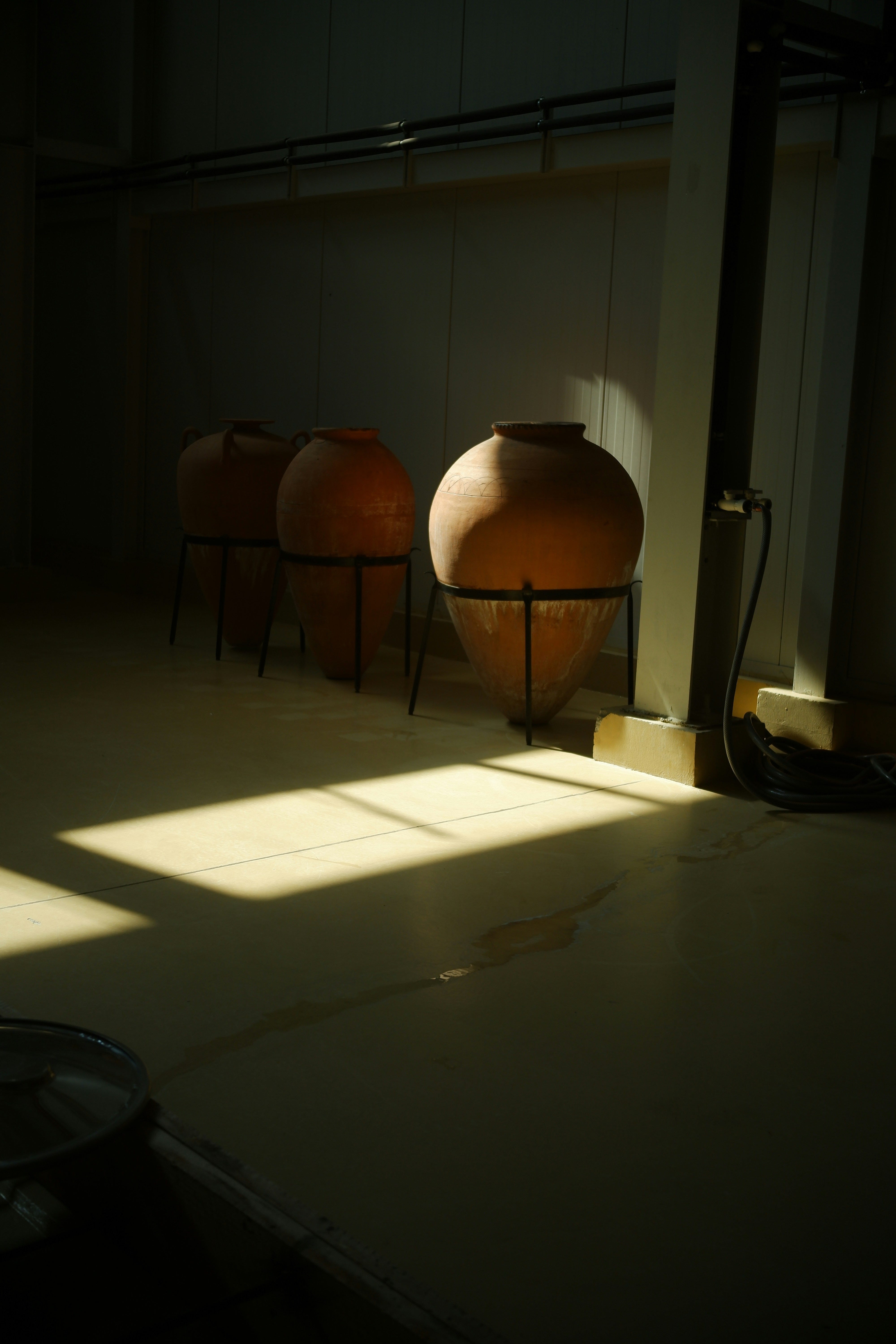
For most of history, this was how white wine was made—on its skins. The idea of stripping a white grape of its texture and tannin was a much later invention.
Then industrialization happened.
By the 20th century, white wines had to be crisp, pale, and easy-drinking—so winemakers stopped fermenting on the skins. Orange wine vanished, except in places where tradition refused to die.
Fast forward to today, and orange wine is back. Not because of trend-chasing, but because some winemakers never stopped believing in its power.
Where to Get the Best Orange Wines
Georgia 🇬🇪
Signature Grapes: Rkatsiteli, Mtsvane
What to Expect: Bold tannins, nutty aromatics, structured wines fermented in qvevri
Italy 🇮🇹 (Friuli-Venezia Giulia, Tuscany, Trentino-Alto Adige)
Signature Grapes: Ribolla Gialla, Malvasia, Pinot Grigio
What to Expect: Long maceration times, amphora aging, incredibly complex and age-worthy wines
Slovenia 🇸🇮
Signature Grapes: Rebula (Ribolla Gialla), Malvasia
What to Expect: A balance of structure and elegance, often similar to Friuli but with a wilder edge
France 🇫🇷 (Roussillon, Provence, Alsace)
Signature Grapes: Grenache Blanc, Macabeo, Gewürztraminer
What to Expect: A more Mediterranean expression—textured but fresh
Denmark 🇩🇰 (Yes, Really)
Signature Grapes: Solaris
What to Expect: Bright acidity, citrus-driven, clean but textural
A Few of My Favorite Bottles
📍 For the Skeptics ($30 and under)
Chona’s Marani Mtsvane (Georgia) – Bold, aromatic, beautifully structured
Pheasant’s Tears Rkatsiteli (Georgia) – A clean, structured qvevri wine
📍 For the Converts ($75 and under)
Foradori ‘Fuoripista’ Pinot Grigio (Trentino-Alto Adige, Italy) – The wine that really convinced me
Radikon ‘Slatnik’ (Friuli, Italy) – Citrus oil, almonds, light grip
📍 For the True Believers
Gravner ‘Breg Anfora’ (Friuli, Italy) – The godfather of skin-contact wine
Domaine Gauby ‘La Roque Blanc’ (Roussillon, France) – Refined but deeply compelling
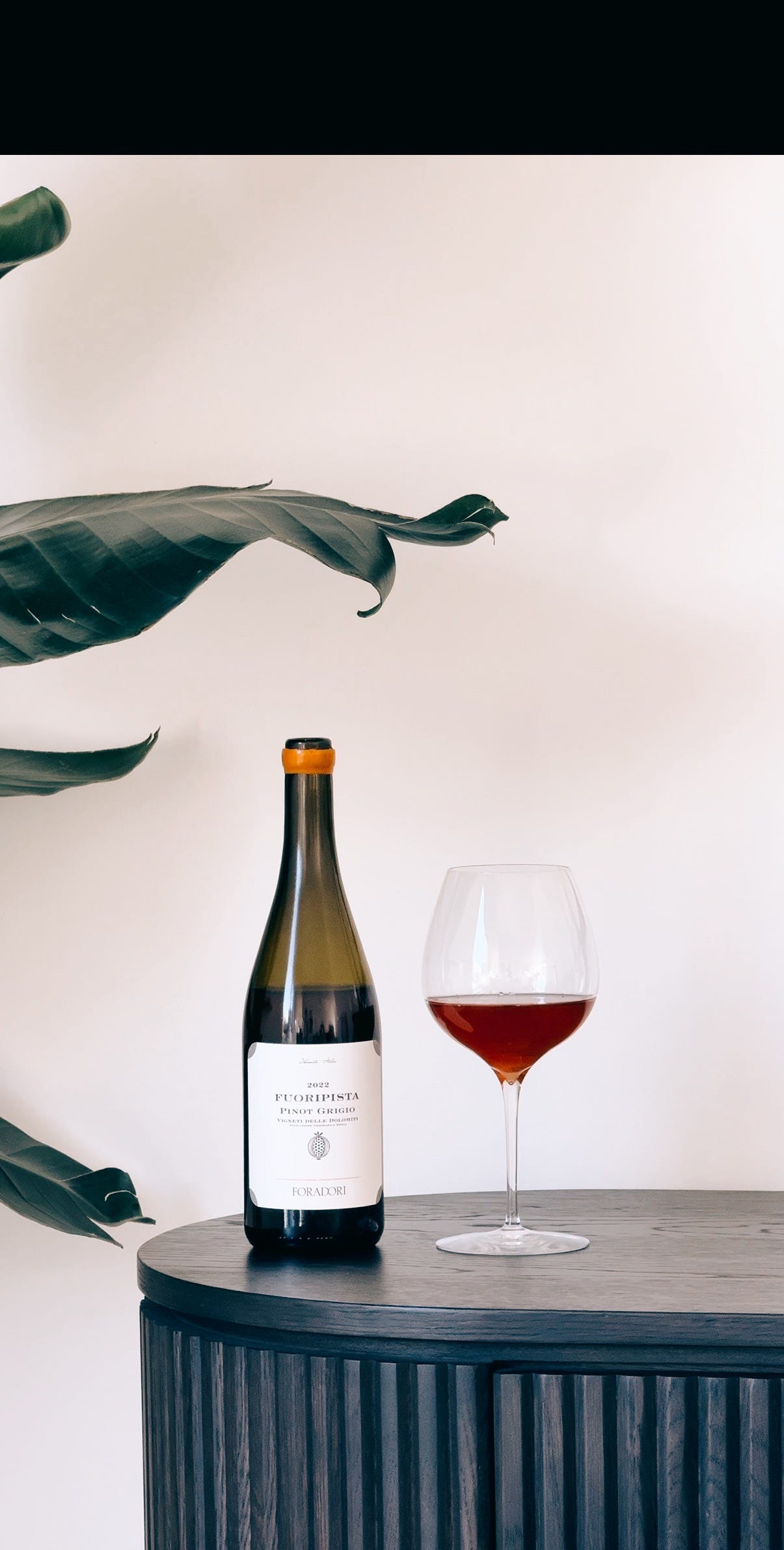
Foradori ‘Fuoripista’ Pinot Grigio from Italy’s Trentino-Alto Adige is a benchmark for orange wine with a strong biodynamic pedigree.
Final Thought: Drink It Because It’s Good, Not Because It’s Cool
If you’ve read this far, then hopefully you’re down to give orange wine another chance. And for that, I respect you.
So here’s my challenge: go find a good one.
Push your boundaries. Step outside your comfort zone. Explore the frontier. You never know—on the other side, you might just find something better than you ever knew existed.
And if you still hate orange wine?
No hard feelings.
More for me.
Never really gave Orange wine a chance myself. I may reconsider. Thanks for sharing!
So the Spanish have an orange wine but it is not in fact what you write about above. It is basically similar to Sangria and uses orange peel. I had to research it on perplexity to figure it out: In Spain, particularly in the Condado de Huelva region, vino de naranja refers to a different product entirely. It is an aromatized wine made by macerating orange peels in alcohol and blending it with a base wine.
Production: The peels are steeped in alcohol for months to extract their essence before being combined with white wine. The final product is aged using the criadera-solera system for at least two years.
Flavor Profile: Sweet and aromatic with pronounced orange flavors, it is distinct from the skin-contact white wines described above